Can Better Sleep Help You Live With Pain?
See what research on CBT-I shows about sleep and persistent pain, plus practical questions to bring to an appointment.

When you live with persistent pain, finding a comfortable position and finally getting some rest can feel like a nightly challenge. Pain and poor sleep can reinforce each other. That makes sleep difficulties worth addressing as part of pain care, although better sleep does not guarantee less pain. [1] [2]
What does the research show?
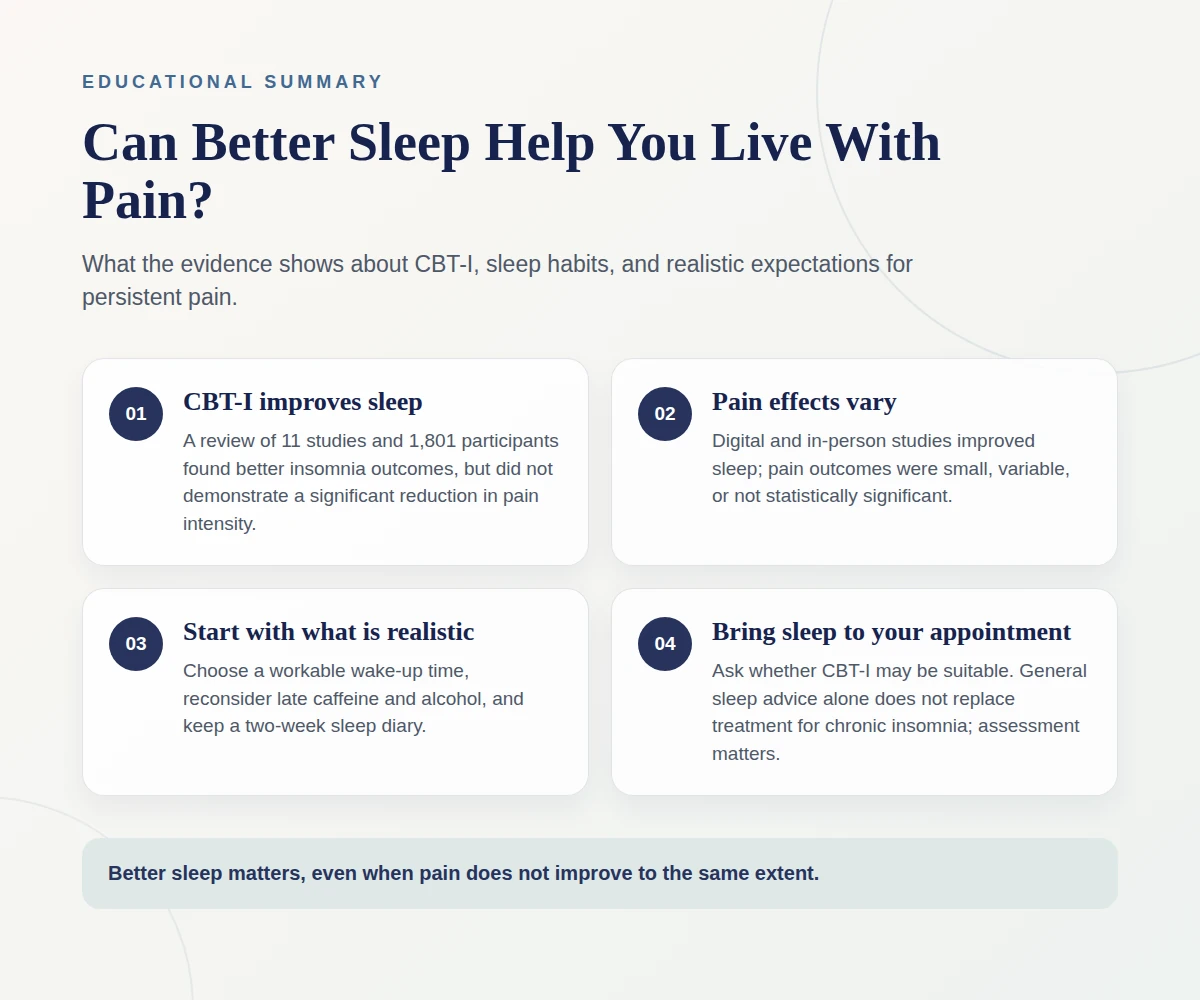
A review of 11 studies involving 1,801 people with persistent muscle or joint pain found that cognitive behavioral therapy for insomnia, known as CBT-I, improved insomnia. This treatment helps change habits and thoughts that interfere with sleep. However, the review did not demonstrate a significant reduction in pain intensity. [1]
A trial involving 207 adults reported promising results for a digital version of this therapy: improvements in insomnia lasted up to six months, and some pain-related outcomes also favored the intervention, but effects were small and varied depending on the measure used. The comparison was with a waiting list, and authors had ties to the company behind the program. These limitations mean the findings cannot justify recommending just any sleep app. [2]
Another trial, involving 123 people with persistent spinal pain, found sleep benefits when CBT-I was added to treatment. However, after one year, there was no statistically significant difference between groups in the main measure of pain intensity. [3]
What can you do today?
- Choose a realistic time to get up: aim for a regular routine and go to bed when you feel sleepy, without turning rest into another performance target.
- Reconsider that late coffee: avoid caffeine close to bedtime and do not use alcohol to help you fall asleep.
- Keep a simple diary for two weeks: record bedtime, getting-up time, awakenings, and how you felt during the day.
- Bring a specific question to your next appointment: “I have pain and trouble sleeping. Would CBT-I be suitable for me?”
These adjustments can be part of care, but they do not replace treatment for ongoing insomnia. Bring the diary to an appointment: it can reveal patterns that a single night cannot. [4]
What if these changes are not enough?
That does not mean you have failed. General advice about sleep habits alone is not considered sufficient treatment for chronic insomnia. Techniques that limit time in bed need assessment and supervision: they may temporarily increase sleepiness and are not suitable for everyone. [5]
References
- Cognitive behavioral therapy for insomnia in people with chronic musculoskeletal pain — systematic review and dose-response meta-analysis
- The Effects of Digital Cognitive Behavioral Therapy for Insomnia in Chronic Pain — randomized controlled trial
- Cognitive Behavioral Therapy for Insomnia in Pain Management for Nonspecific Chronic Spinal Pain — randomized clinical trial
- Clinical Guideline for the Evaluation and Management of Chronic Insomnia in Adults
- 2023 Guidelines on the Diagnosis and Treatment of Insomnia in Adults — Brazilian Sleep Association
Key points to remember
Visual summary