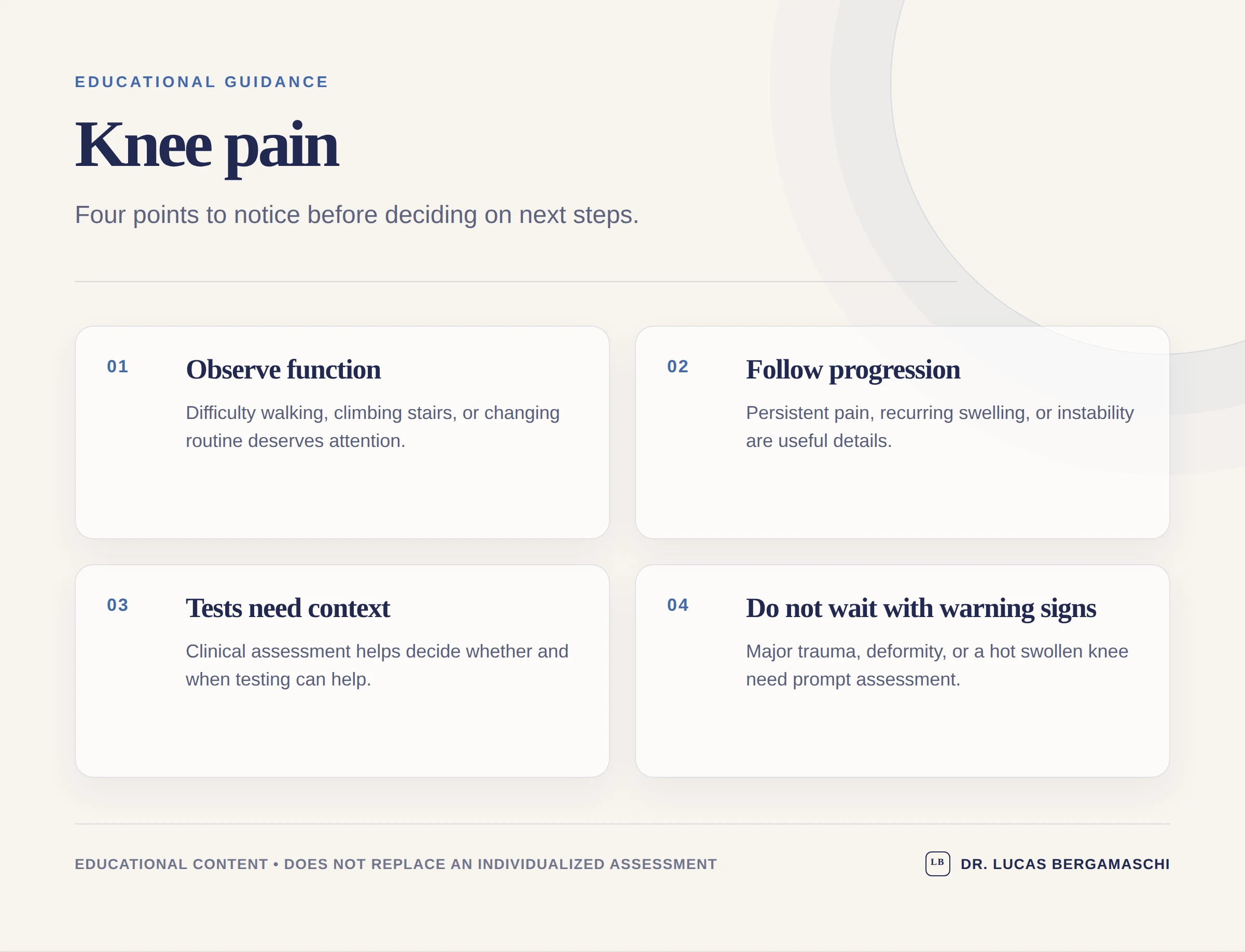
Knee pain: when is it time to see an orthopedic specialist?
Learn when knee pain deserves an assessment and which warning signs call for prompt care.

Knee pain is not a single disease. It may follow a twist, a rise in activity, repeated overload, changes in the joint, or other situations. For that reason, the same symptom can require different paths for different people.
In many cases, a clinical conversation and physical examination are more useful than ordering tests on your own. The assessment looks at how pain started, where it is felt, what you can or cannot do, and whether there are signs that need faster investigation. [1]
When it makes sense to book an assessment
An appointment is reasonable when pain persists, returns often, limits important activities, or changes the way you walk. It is also worth investigating when the knee feels unstable, gives way, swells repeatedly, or interferes with sleep and daily routine.
References
Key points to remember
Visual summary