Injections for pain: what they are, when they may be considered, and what to expect
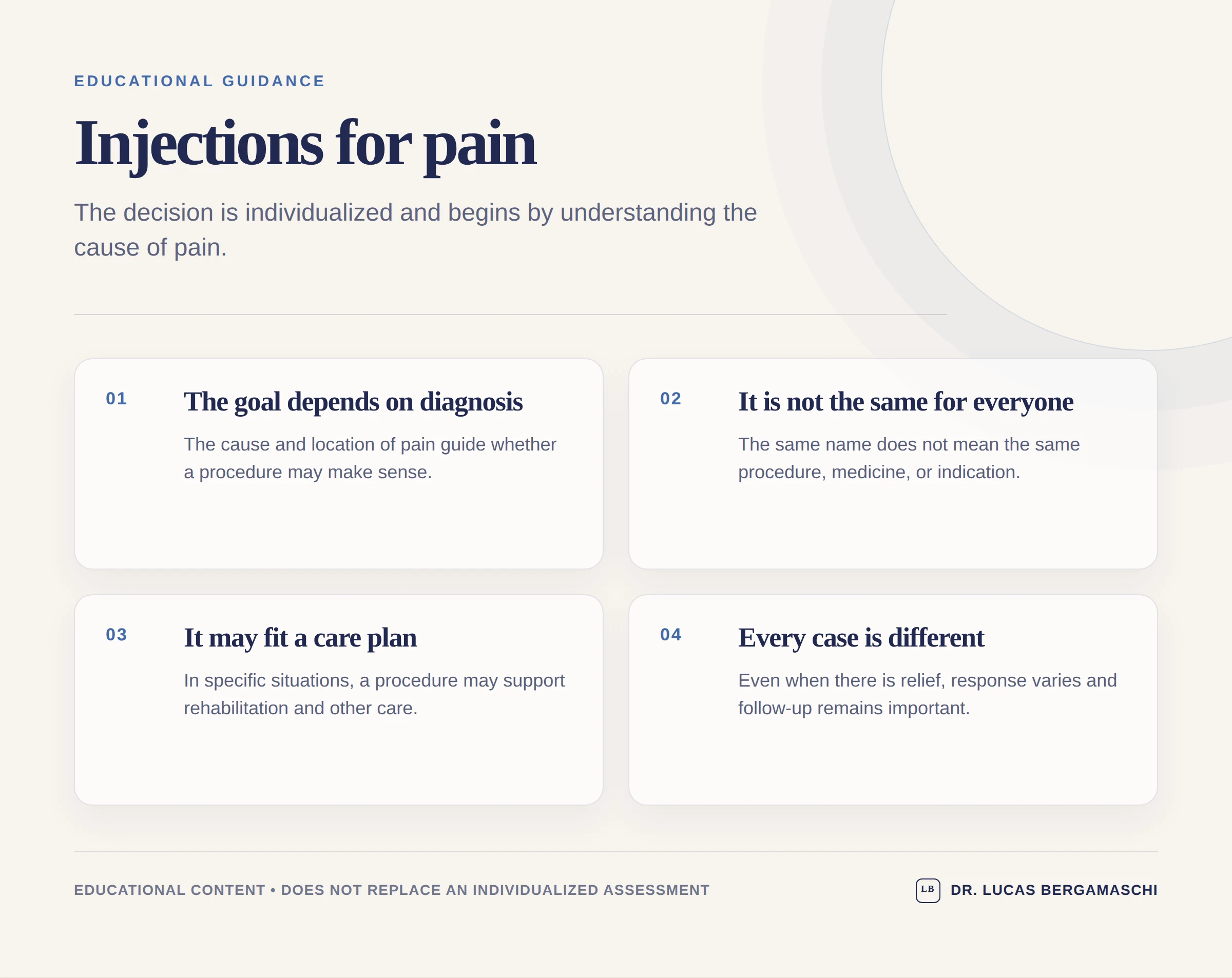
Understand in simple terms what an injection is and why the decision depends on an individualized assessment.

An injection is a term used for the application of medicines or other substances into a body structure, such as a joint. But the term alone does not describe the diagnosis, product used, or expected result.
Before considering a procedure, the key question is: what is causing the pain and what goal makes sense for this person? In some situations, an injection may be considered to help control symptoms and support a rehabilitation plan. In others, it may not be the best choice.
What changes from one injection to another?
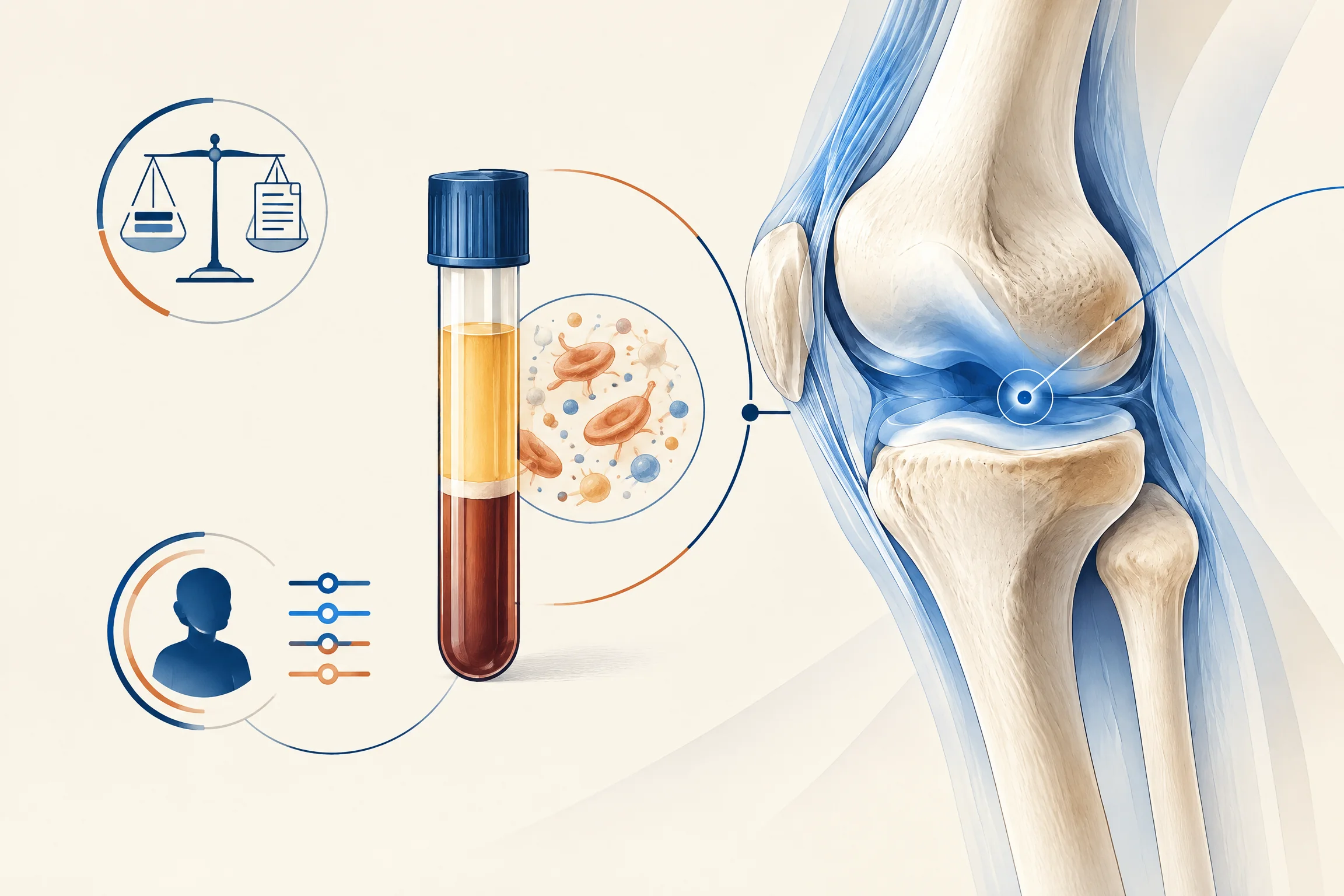
The treated area, diagnosis, applied substance, and technique all matter. Comparing procedures only by name can be misleading. For example, an injection for knee osteoarthritis is not automatically equivalent to an application in another joint or for another type of pain.
In osteoarthritis guidelines, intra-articular corticosteroid may be considered in specific situations with an expectation of short-term symptom relief. Hyaluronic acid is not recommended for routine use by some important guidelines. [1] [2]
References
Key points to remember
Visual summary