PRP and prolotherapy: what does the evidence allow us to expect?
Understand the differences between PRP and prolotherapy, the limits of evidence, and why indication needs to be individualized.
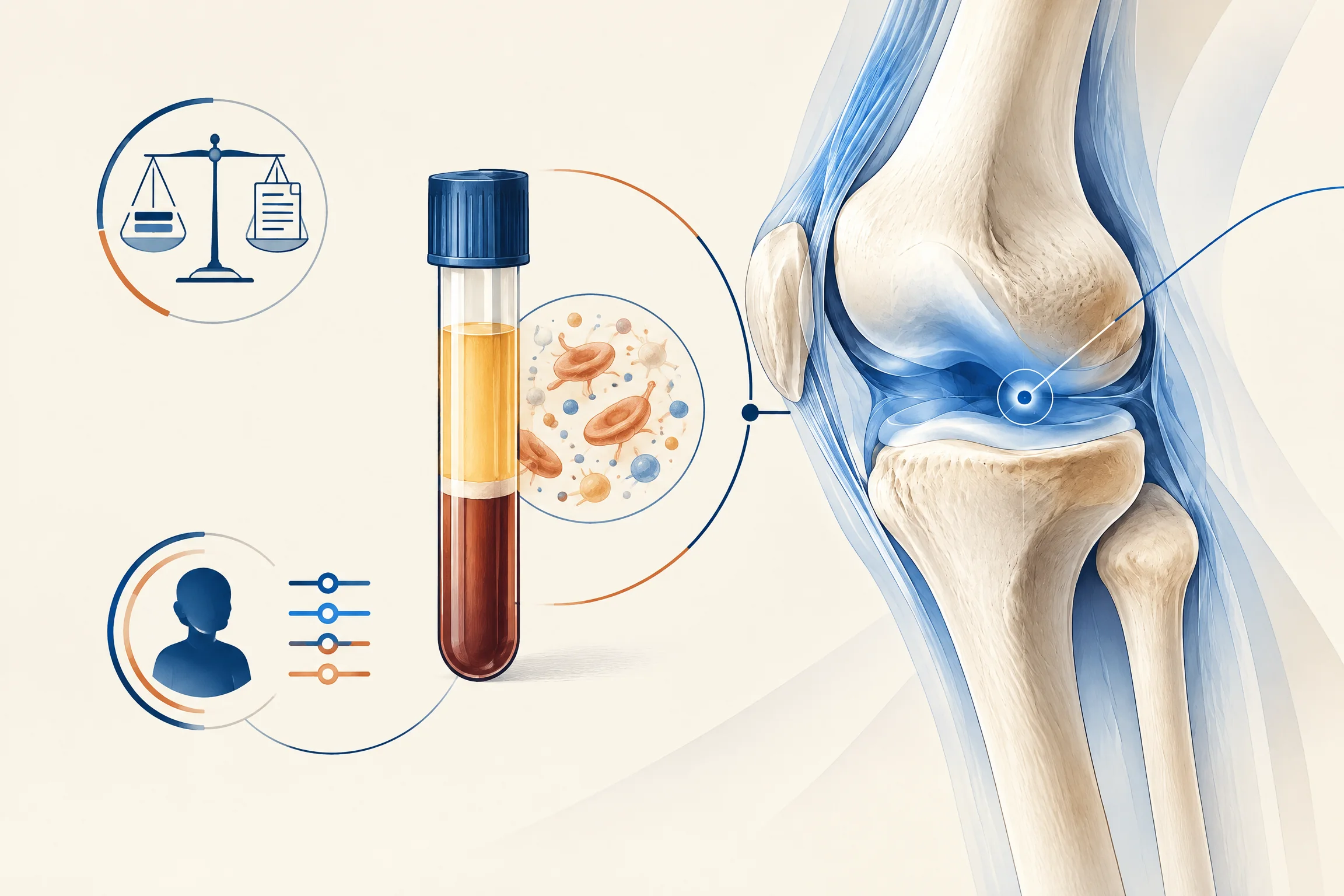
PRP and prolotherapy often appear in conversations about pain and regenerative medicine. The names do not mean the same thing and, by themselves, do not predict the outcome of a treatment.
What is PRP?
Platelet-rich plasma is prepared from a person's own blood. The sample is processed and applied to a defined area. Platelet concentration, white-cell content, preparation method, treated joint or tendon, and diagnosis can vary considerably between studies and services.
What is prolotherapy?
Prolotherapy is a term used for injections of substances intended to create a local response. Because substances and techniques may differ, there is not one single prolotherapy that can be compared simply with every other treatment.
What does the evidence show?
In knee osteoarthritis, some studies report improvements in pain or function with PRP compared with placebo. Results vary when other treatments are used for comparison. Research is also limited by differences between formulations and by limited data on structural change. It is not accurate to promise cartilage regeneration or say the procedure works the same way for every pain condition. [1] [2] [3]
References
Key points to remember
Visual summary