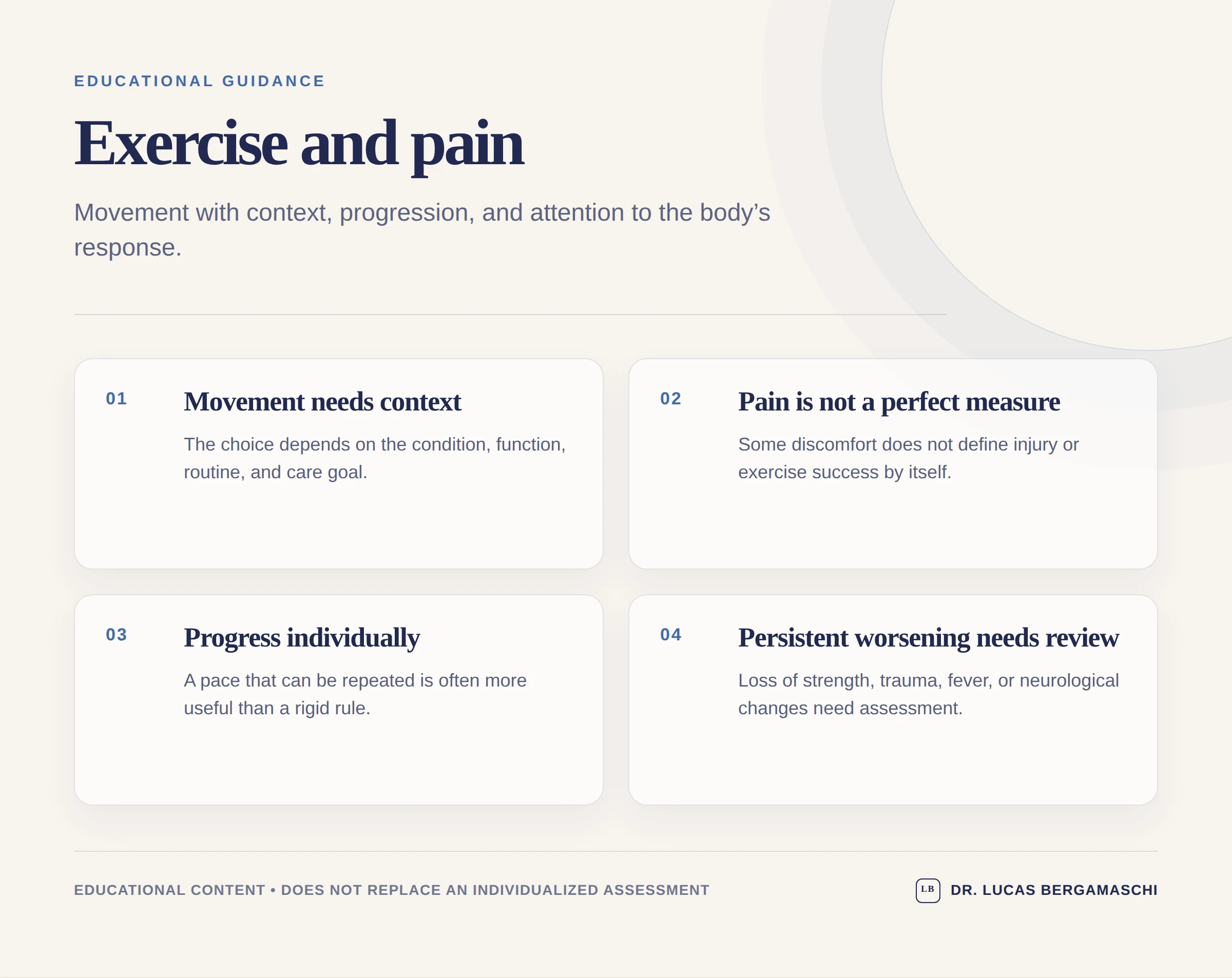
Exercise and pain: finding a safe pace
Understand why movement needs context, how to observe your body's response, and when a plan should be reviewed.
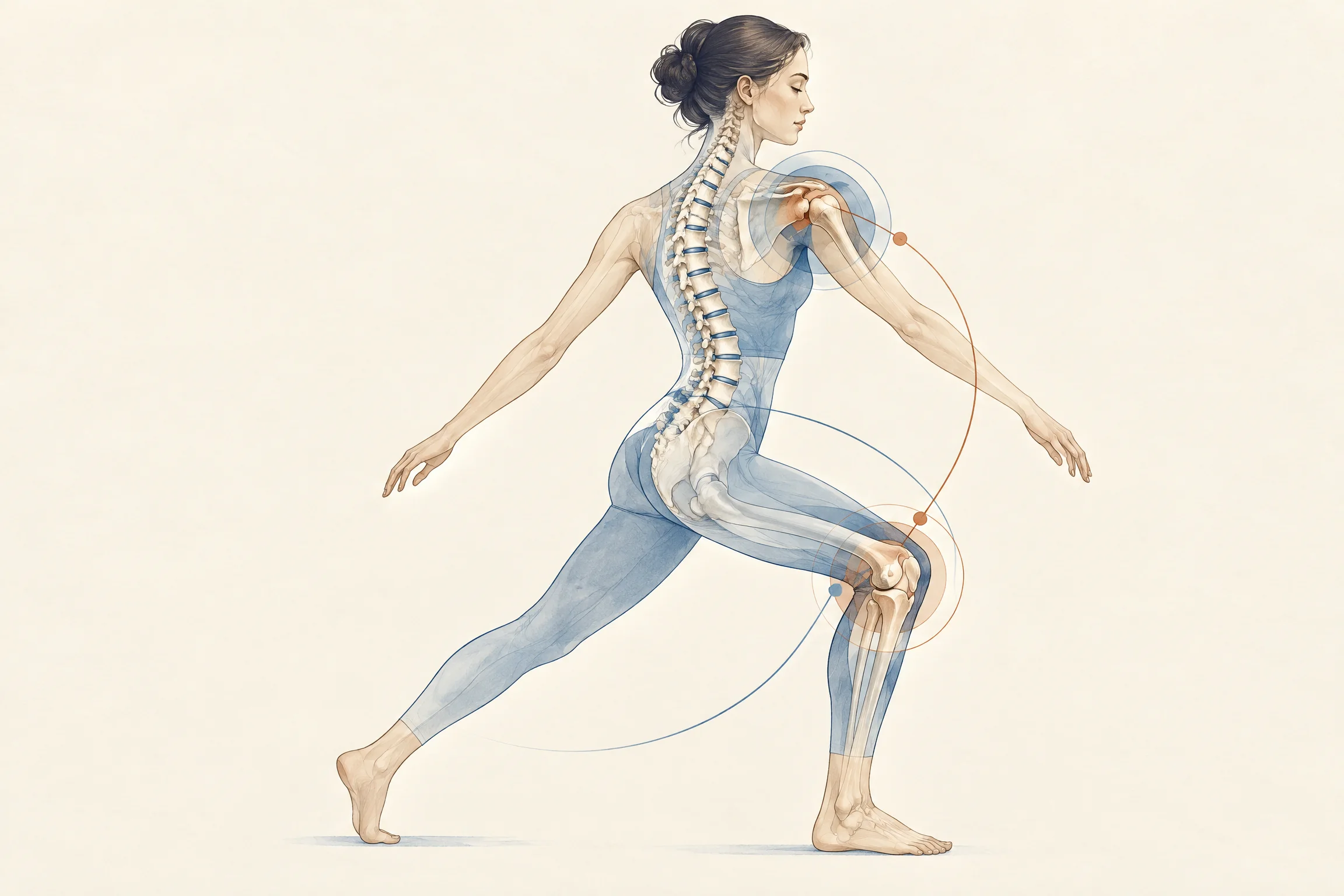
Exercise can be part of care for many painful conditions, but that does not mean every movement suits every person. A useful starting point considers the likely cause, function, routine, and what happens to symptoms during and after activity.
Is some pain during exercise normal?
Not every sensation during exercise means injury, but it is also not necessary to tolerate any amount of pain to improve. A recent review found no clear difference in pain reduction between exercise performed with some discomfort and pain-free exercise. Certainty in the evidence was low, so there is no universal rule. [3]
How can you find a safer pace?
In general, progression should be gradual and adjusted to the body's response. The chosen activity should be repeatable and aligned with the care goal. If symptoms worsen persistently, function declines, or exercise changes the pattern of pain, the plan needs review rather than simply more effort.
References
Key points to remember
Visual summary