Low back pain: what may help day to day and which signs need attention
General information about low back pain, movement, and signs that call for priority professional assessment.
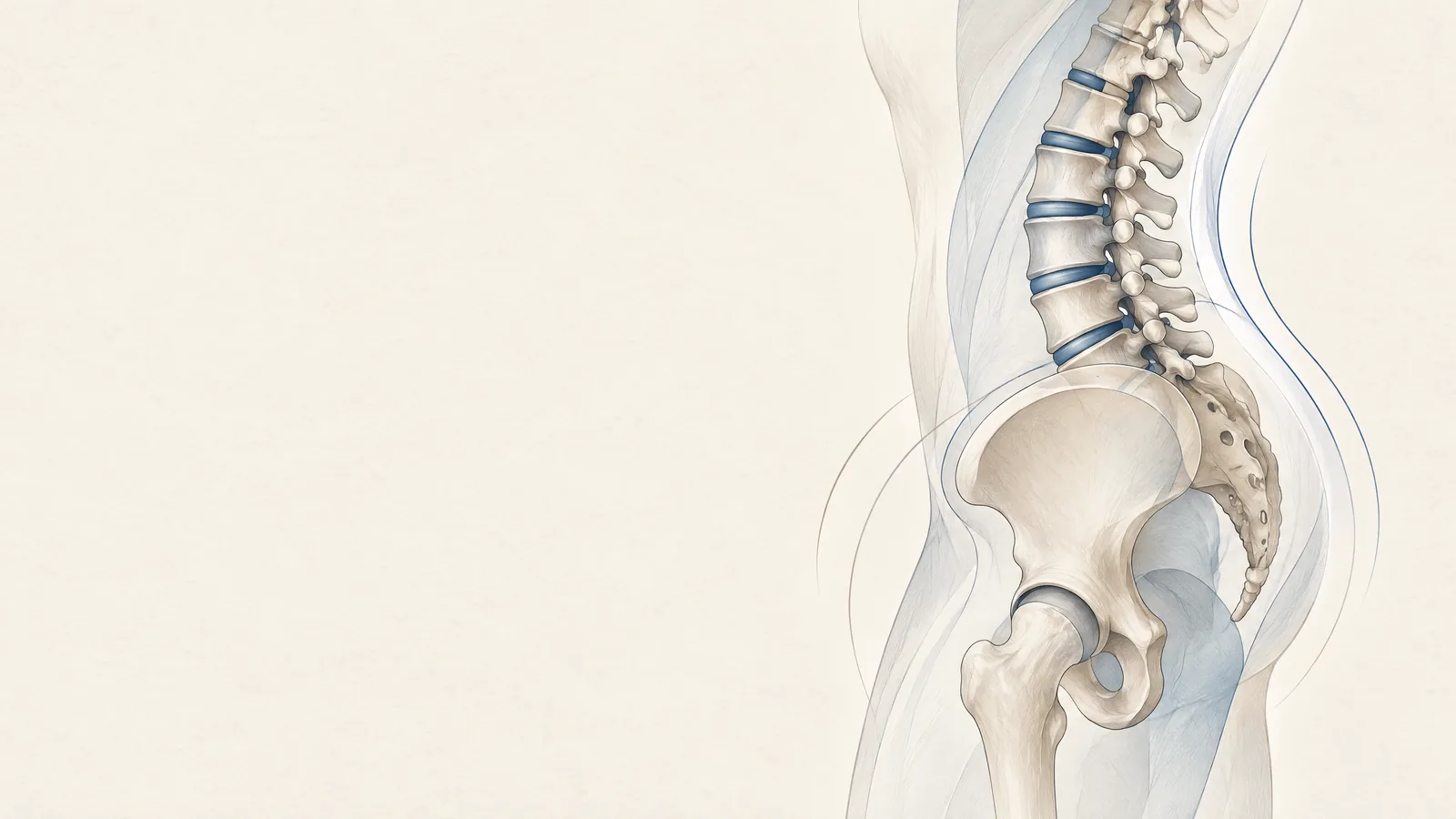
Low back pain is very common. It may start after an effort, a change in routine, or long periods in the same position. In other situations, there is no single clear reason. That does not mean the pain should be dismissed; it means the assessment needs to consider your history, examination, and the impact on your life.
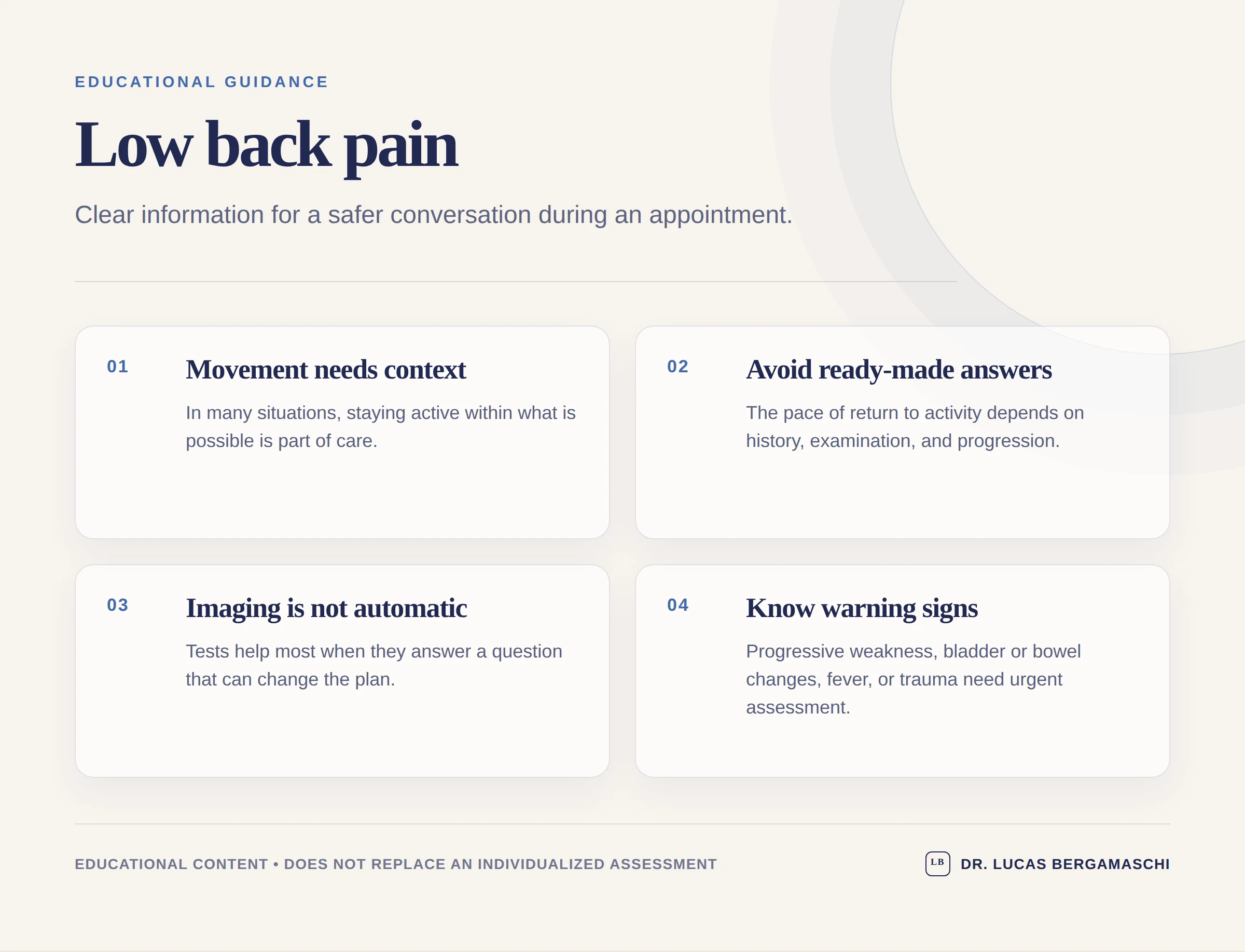
For many people, staying active within what is possible and gradually returning to activities can be part of care. Long periods of complete bed rest are usually not the goal. The right activity and pace vary from person to person. [1] [2]
Why imaging is not always needed at the beginning
Tests are useful when they answer a clinical question and can change a decision. In low back pain without warning signs, routine imaging may not add useful information. An appointment helps define whether there is a reason to investigate and, if so, which test makes sense. [1] [2]
References
Key points to remember
Visual summary