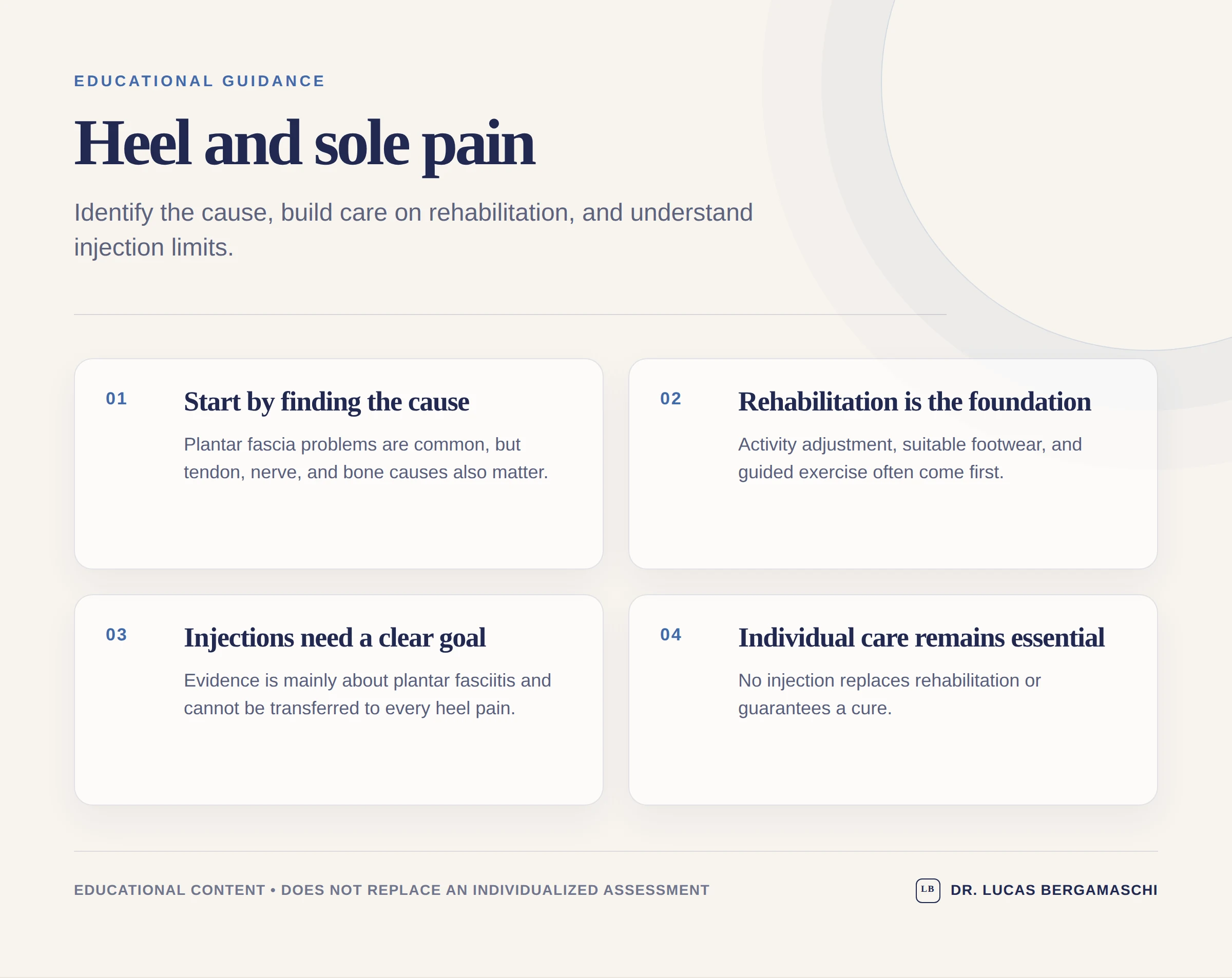
Heel and sole pain: common causes and when injections enter the conversation
Understand common causes of heel pain, the foundation of rehabilitation, and what evidence allows us to expect from injections.
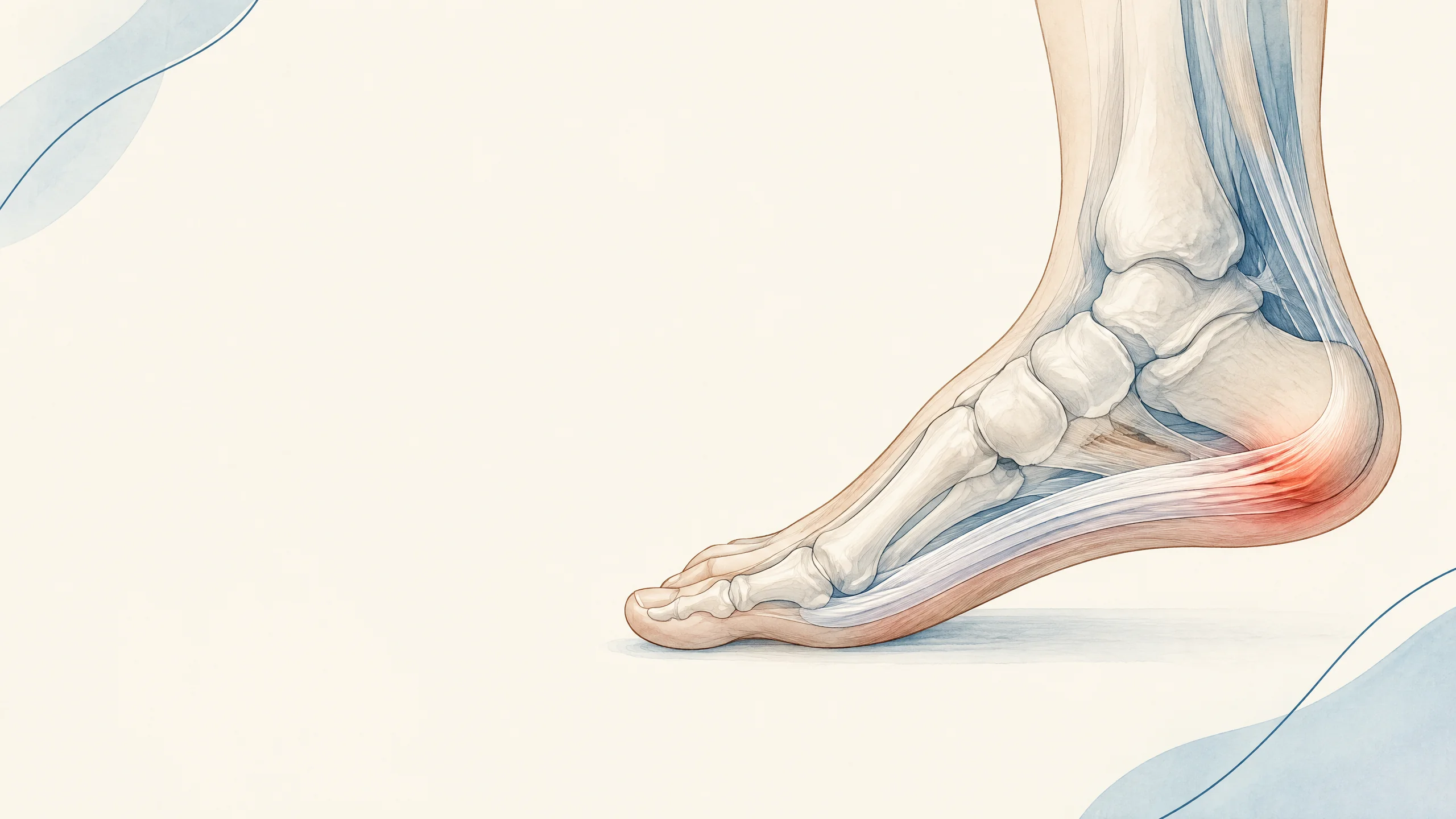
A sharp pain when you first put weight on the foot, especially with the first steps in the morning, is a common complaint. It is often related to plantar heel pain, which may occur with changes in the plantar fascia — the band of tissue that supports the foot arch. It is not the only possible diagnosis, however.
Pain after increasing walking or running, standing for long periods, or changing training load may be related to this condition. Achilles tendon problems, nerve irritation, loss of heel cushioning, and stress fractures are also considered. A heel spur may appear on an X-ray even in people without pain; by itself, it does not explain symptoms. [1] [2]
First step: understand the cause
Assessment considers where it hurts, when it began, what makes it better or worse, walking pattern, and whether there was trauma. Tests may be requested when they help clarify a clinical question or when warning signs are present. There is no single injection that suits every cause of foot pain.
The foundation of treatment is usually conservative
For plantar heel pain compatible with plantar fasciitis or fasciopathy, a plan often begins with temporary activity adjustment, suitable footwear, and guided exercises. Clinical guidance supports specific plantar fascia and calf stretching; insoles may be used together with other measures, not as a standalone solution. [1]
When might an injection be considered?
When pain persists despite a well-conducted plan, an injection may be discussed. It is a needle application to a defined area and should have a clear goal, such as seeking symptom relief to help a person progress with rehabilitation. The studies below refer mainly to plantar fasciitis; results should not automatically be transferred to other causes of heel pain.
Corticosteroid
Corticosteroid injections may bring short-term relief for some people, but the effect may be temporary. Study quality and results vary. The decision needs caution because adverse effects such as reduced heel-fat padding and plantar-fascia rupture have been reported; serious events are uncommon but may be underreported. [1]
Hyaluronic acid
Hyaluronic acid has been studied for pain relief and function. One controlled study found short-term benefit in people with persistent pain; in another 24-week study, hyaluronic acid and corticosteroid improved pain and function without clear superiority by the end of follow-up. These findings are promising but do not define the same indication for everyone. [3] [4]
Dextrose prolotherapy
Dextrose prolotherapy uses a glucose solution applied to a defined area. A review of randomized studies found short-term improvements in pain and function but also highlighted varied protocols and the need for larger studies to determine concentration, technique, number of applications, and longer-term results. [5]
PRP (platelet-rich plasma)
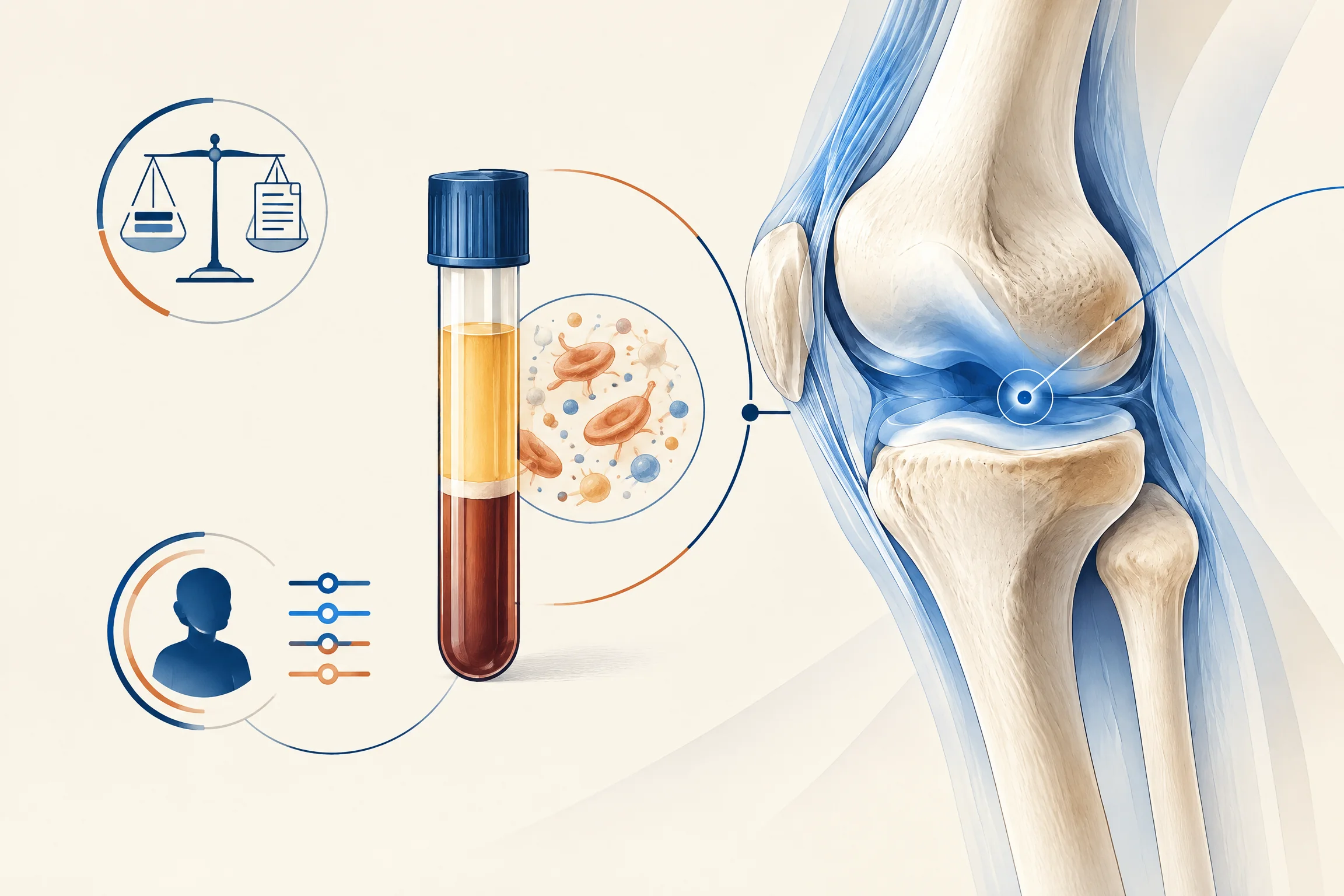
PRP is prepared from a person's own blood. A review of 24 randomized studies found better pain control than corticosteroid between three and six months, with no significant difference in the first month or at 12 months. This does not prove tissue regeneration or guarantee a cure. [6]
References
- Koc TA Jr, et al. Heel Pain – Plantar Fasciitis: Revision 2023
- AAOS OrthoInfo: Plantar Fasciitis and Bone Spurs
- Kumai T, et al. Short-term efficacy and safety of hyaluronic acid injection for plantar fasciopathy
- Raeissadat SA, et al. Hyaluronic acid versus corticosteroid in plantar fasciitis
- Chutumstid T, et al. Dextrose prolotherapy for chronic plantar fasciitis
- Zuo A, et al. PRP versus corticosteroids in plantar fasciitis
- CFM: Resolution No. 2,464/2026 on PRP use
Key points to remember
Visual summary