Shoulder pain: when should you seek an assessment?
Understand why shoulder pain is not a single diagnosis and which signs need prompt assessment.

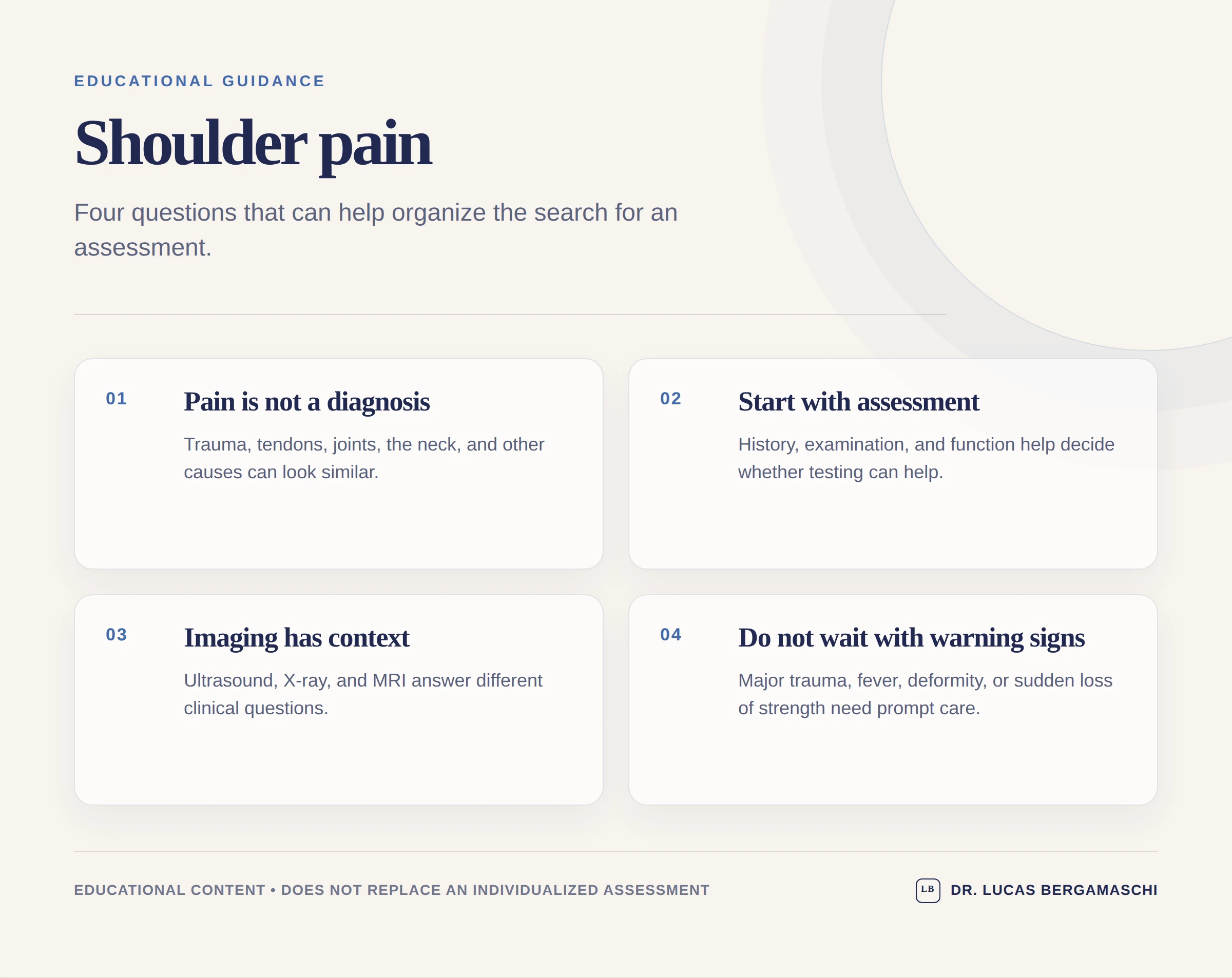
Shoulder pain can occur after exertion, a fall, repetitive movements, or even without an obvious cause. It does not point by itself to one disease. Assessment needs to consider how it began, where it hurts, which movements became difficult, and whether other symptoms are present.
Not every shoulder pain needs imaging right away
During an appointment, a clinician may assess shoulder movement, strength, the neck, and other areas that can produce similar pain. X-ray, ultrasound, or MRI can help when there is a specific clinical question. Testing without knowing what is being investigated does not always clarify the problem. [1] [2]
Book an assessment if pain persists, returns often, limits work, sleep, or simple activities, or if there is loss of strength, marked stiffness, instability, or progressively worsening pain.
References
Key points to remember
Visual summary