Acupuncture for pain: benefits and limits
See when acupuncture may be part of pain care and why it does not replace investigation or rehabilitation.

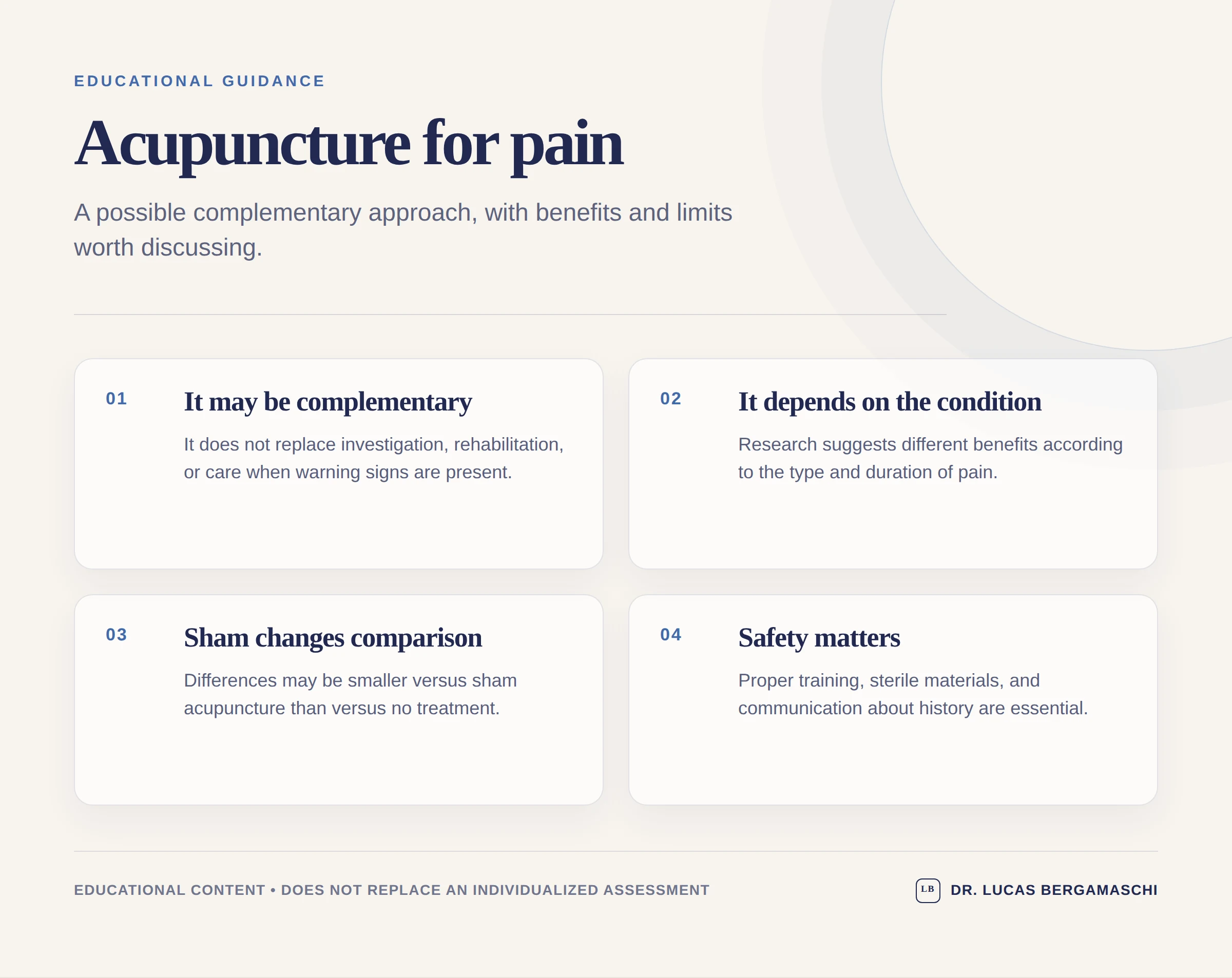
Some people may consider acupuncture as a complementary part of pain care. That does not mean it is indicated for every situation or that it replaces investigation of the cause, rehabilitation, or necessary medical attention.
What do we know about possible benefits?
Research suggests acupuncture may help some people with low back pain, neck pain, or knee osteoarthritis. In many studies, the difference is greater when acupuncture is compared with no treatment and smaller when compared with sham acupuncture. This suggests that both needle stimulation and care-context factors may contribute. [1]
How can it fit into a care plan?
The decision depends on the type and duration of pain, function, and a person's preferences. When considered, acupuncture may accompany measures such as guided exercise, activity adjustment, and clinical follow-up. It should not delay assessment of fever, major trauma, loss of strength, altered sensation, or other warning signs.
Safety is part of the decision
Look for a properly trained professional who uses sterile materials and explains the procedure. Report health conditions, pregnancy, blood-thinning medicines, infections, fainting with needles, and any new symptoms. Local discomfort or a small mark may occur, but intense or persistent symptoms should be reported.
References
Key points to remember
Visual summary