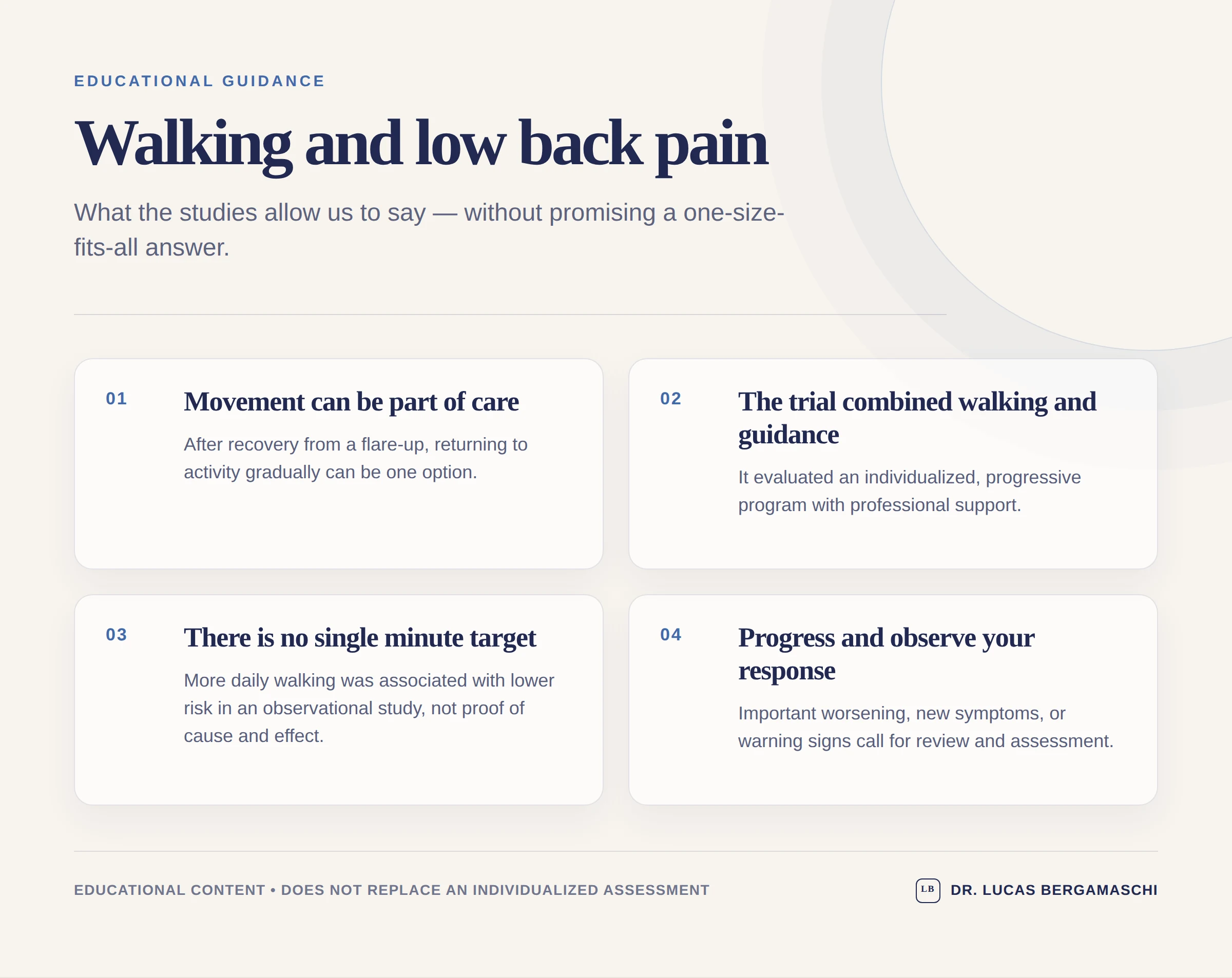
Can walking help prevent low back pain from returning? What the studies show
See what recent research says about walking, low back pain recurrence, and returning to movement without rigid targets.

After a low back pain flare-up, many people worry it will happen again. Fear can lead to moving much less and hoping rest will protect the back. Yet, for many people, a gradual return to activity is part of care. Walking can be an accessible starting point when it fits the person’s current situation and response.
What the most direct research found
A 2024 randomized trial followed 701 adults who had recovered from an episode of non-specific low back pain. Half received an individualized, progressive walking program plus six physiotherapist-led education sessions over six months. The other half received no intervention. [1]
In the program group, the median time to another activity-limiting episode was 208 days, compared with 112 days in the control group. This suggests benefit for preventing recurrence in that setting, but it should not be oversimplified: the study tested walking plus professional guidance after recovery from a flare-up; it does not show that walking alone cures every type of low back pain. [1]
Do I need to walk 100 minutes every day?
No. A 2025 cohort study followed 11,194 people without chronic low back pain at the start and found lower future risk among those who walked more during the day. However, this study observed habits rather than assigning a treatment. It shows an association, not proof that a specific amount of walking caused the difference. [2]
The minutes included everyday travel, not only planned exercise. Turning these numbers into a rigid target may not help someone who is starting out or needs a slower progression.
How to bring this into daily life
- Start with an amount you can repeat without important or lasting worsening.
- If helpful, divide walking into shorter periods throughout the day.
- Notice pain, sleep, energy, and function over the next hours and day.
- Increase gradually; if pain greatly limits daily life, seek guidance to adjust the plan.
Walking, strengthening, and other activities may be part of care depending on the condition, preferences, and needs. World Health Organization guidance includes exercise programs among non-surgical options for chronic primary low back pain, with individualized decision-making. [3]
A possible step, not a promise
Back care can include finding a way to move that fits your life. With appropriate assessment and progression, walking may be part of that care — without promises of a cure and without impossible targets.
References
- Pocovi NC, et al. WalkBack: progressive walking and education to prevent low back pain recurrence
- Haddadj R, et al. Volume and Intensity of Walking and Risk of Chronic Low Back Pain
- WHO guideline for non-surgical management of chronic primary low back pain
- NHS: Back pain
- Singh B, et al. The effect of exercise on clinical pain: umbrella review
Key points to remember
Visual summary